
Creative Fatigue on Meta Ads: How to Spot It Early and Fix It
Rising CPA is not always fatigue. The diagnostic that rules out the other causes, the early warning metrics, and the five step iteration fix.
Insights, strategies and creative inspiration
to help your brand grow.
Rising CPA is not always fatigue. The diagnostic that rules out the other causes, the early warning metrics, and the five step iteration fix.
What mortgage brokers really pay per lead on Meta: benchmark tables, the financial products targeting rules, Meta vs Google, and cost per funded loan maths.
Three job titles that sound like the same person. What each one delivers, who they report to, 2026 market rates, and the order a DTC brand should hire them in.
The avatar wave shipped tools, not accountability. What a managed AI avatar agency handles end to end, plus a checklist for tool vs agency.
Which agencies actually understand claim compliance, creator diversity, and paid performance for skincare? Ranked breakdown with comparison table.
Data from 67,000+ Meta ads: static delivers a 28% lower CPA than video. Here's what that means for your format mix and testing sequence.
The Larger Market Formula explains why most DTC brands fight over the 3% ready to buy now, and how shifting budget to the ignored 80% lowers CPA for good.
The six-variable matrix that turns one winning Meta ad into 20 variants without triggering fatigue, with benchmarks for when to cut or scale each wave.
A stage by stage walkthrough of what a done-for-you UGC ad agency actually handles each month, with a comparison table to decide if you need one at all.
What the phrase actually demands of your UGC production: a persona x angle brief grid, real testing volume, and the media-buying habits to drop.
Both platforms allow it, with conditions. The disclosure rules, where the FTC and ASA draw the line, and what actually gets AI ads rejected.
Eight criteria that predict performance, the red flags to walk away from, and how the evaluation changes when you sell through retail.
Tools sell capacity, agencies sell the outcome. The hidden workload of running AI UGC yourself, the honest side-by-side and a decision matrix.
Three routes to AI UGC ads for UK brands, the ASA and platform rules that apply, and 12 questions to put to any agency before you sign.
Median ROAS, CTR, CPA and CPM for beauty on Meta, split by sub-category and funnel stage, with every figure sourced and a symptom-to-fix diagnostic table.
Eight UGC agencies, each pinned to what it is genuinely best for, with a comparison table, our ranking method and no paid placement.
Six things that look like creative diversity but aren't (headline swaps, new faces, resized crops), and the persona x angle x format matrix that actually lowers CPMs.
Every enhancement rated keep or kill in one verdict table, the gen AI toggles that hurt brands, and why the input layer decides your ceiling.
Loewenstein's information gap theory, the Zeigarnik effect, five weak openers rewritten into real curiosity hooks, and the failure modes that turn curiosity into clickbait.
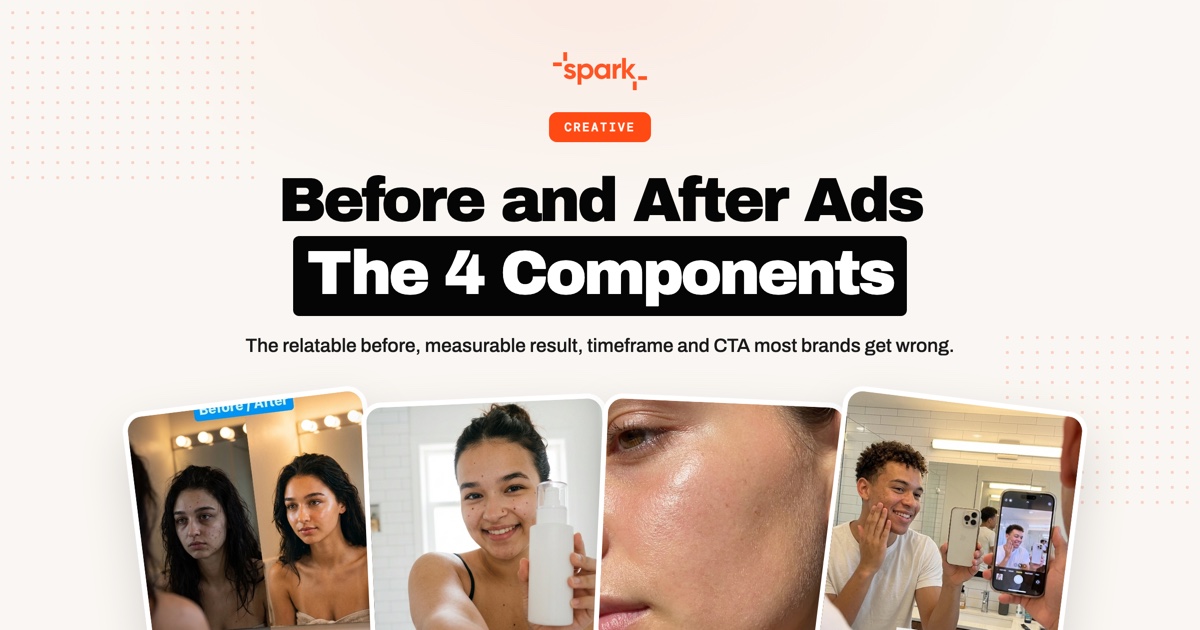
The relatable before, the nameable result, the stated timeframe and the proof-shaped CTA, torn down through True Classic, Prose and Hims, plus the FTC and Meta lines that decide what runs.
Why the brain cannot ignore a broken pattern, four annotated ad openers that exploit it, and the briefing table for engineering scroll-stops on purpose.
The definition, the brand vs performance comparison table, and the three-stage Evidence Loop (inputs, iteration, measurement) that separates ads built to convert from expensive guesses.
The verdict-first comparison: cost, control, rights, measurability and scale, plus a $5,000 worked example and a decision matrix for when to run each.
The nine columns that matter, the ignore list, the spend-first reading order and a seven-row cut, keep or scale decision tree.
The end-to-end production playbook: brief, creator or AI route, hook-first scripts, platform specs, variant edits, launch budget and iteration.
The kill, fix, workable and elite hook rate bands by platform, audience and vertical, plus a decision tree for diagnosing a bad score.
One firm's $20k Meta month worked from lead to signed retainer, and the three levers that actually drop cost per signed case.
The texture shot formula, six skincare UGC formats, the compliant skin journey alternative to before and after, and the claims table that keeps ads out of review purgatory.
Interactive calculator built on our published 2026 rates: creator tier, usage rights term and volume in, monthly DIY vs agency cost range out.
The complete copy-paste creator brief: goal, claims guardrails, hooks, shot list, 9:16 specs, usage rights, timeline and payment terms.
The six-step DIY grind with hours attached, a worked cost model against a done for you retainer, and a decision matrix by spend, team size and volume.
A step-by-step operator's method: impression filters, run-time signals, EU reach data, and turning competitor winners into test briefs.
2026 dental CPL and cost-per-patient benchmarks by treatment, lead-to-chair funnel math, patient LTV, and why creative is the cheapest lever on cost per patient.
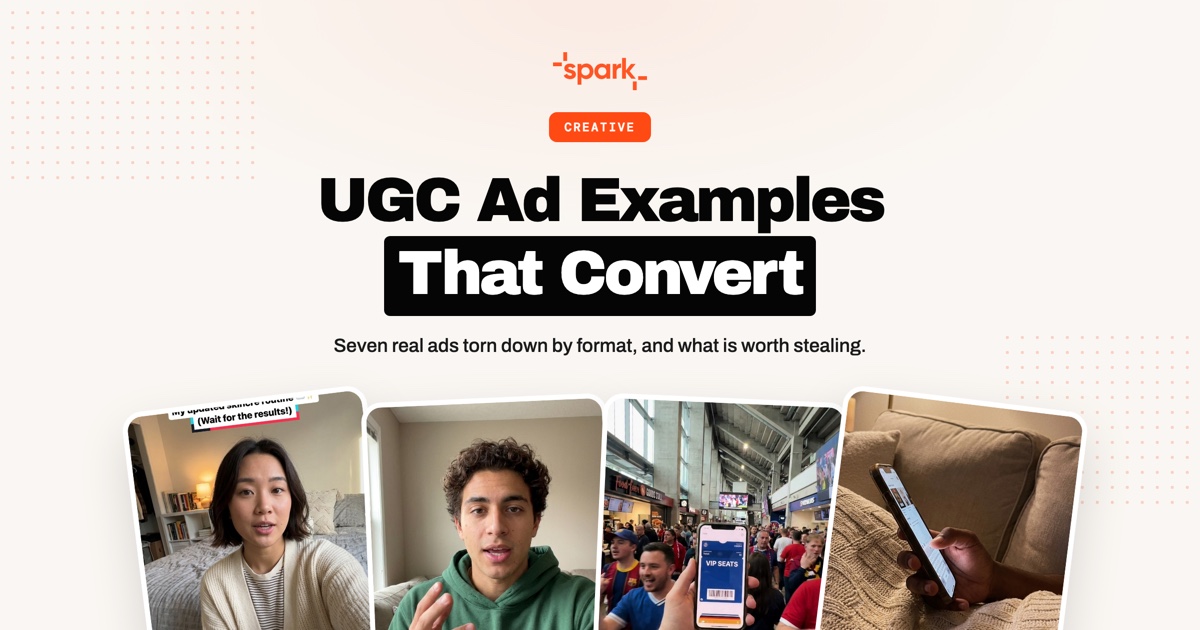
Seven real ads from Jones Road, True Classic and Dr. Squatch pulled apart by format: the hook mechanic, why the structure converts, and what to steal.
The weekly testing quota for every Meta spend tier from $5k to $100k+ a month, the winners each batch should return, and the maths at $25k.
Every attention metric in your Meta reports defined in one place: exact formulas, 2026 benchmark ranges and the reading order that finds the fixable problem.
Your winning ad crushed it for three weeks, then CPL doubled and nothing changed. The saturation maths behind the cliff, Meta's fatigue labels, and the refresh calendar that prevents it.
The kill point decision table we run across client accounts: 1.5x target CPA for test creatives, day 10 reads for scaled ads, and why retargeting never dies on ROAS alone.
The 2026 reference table for ROAS, CPA, CTR, CPC, CPM and hook rate across DTC ecommerce, subscription, lead-gen and local services, with sources.
The 2026 PI channel decision with real CPC, CPL and cost-per-case numbers, a worked $30k example on each channel, and a decision framework for picking one or running both.
The buyer-side 2026 rate card by tier, plus the hidden cost stack (rights, whitelisting, revisions, briefing time) that roughly doubles the quote.
Seven hook angles, each mapped to a buyer motivation, with real 2026 brand examples and a decision matrix for picking the right one.
2026 HVAC CPL benchmarks by call, form-fill and estimate request, season multipliers, and a four-point creative diagnostic for why your CPL is too high.
The full UGC format library, what each does, sound-on vs sound-off fit, and how to pick the 3 to 5 worth testing next.
The 2x to 3x target CPA formula, with a $100 to $150 floor, worked end to end for a $5k/mo and $25k/mo account.
The six-element script structure that converts on Meta and TikTok, a bracketed fill-in template, and a worked example for a real DTC product.
Seven criteria, four agency archetypes (testing studios, boutiques, marketplaces, AI-native) and a use-case decision matrix to pick the right one.
The seven rights to name on paper, the clauses cheat sheet, term vs perpetuity maths, and the whitelisting clause that protects your ad spend.
Real 2026 CPL ranges by treatment (Botox, filler, body contouring, laser, IV, GLP-1, microneedling, HydraFacial), a worked CAC example and the creative levers that move CPL.
Head-to-head data on CPA, fatigue and engagement, plus a budget allocation framework by awareness stage and placement.
What Andromeda actually changed inside Meta's auction, why creative diversity is now the only real lever, plus a 30/60/90 adapt plan.
A 5-stage playbook for camera-shy contractors: AI avatars, customer UGC, job-site B-roll, with a decision matrix and a worked ROI example.
A 6-step playbook for PI firms running Facebook ads in 2026: real CPL benchmarks, a worked cost-per-signed-case example and a Meta plus state-bar compliance checklist.
Six UGC angles that beat your current control for supplements, the FDA, FTC and Meta claims rules to stay safe, and example hook lines.
Map every UGC ad to where the viewer actually is, with a stage-by-stage script-and-hook table and current Meta creative data.
A real 2026 cost model: in-house salaries, tools and overhead vs an agency retainer, plus the ad-spend breakeven and the hybrid verdict.
The exact Meta policy traps that flag aesthetic creative, before-after, brand names, body-image copy, plus the compliant fixes that pass.
Marketplaces, TikTok One, freelance sites, cold outreach, your own customers and studios, sorted by speed, control and cost.
The honest, data-backed breakdown of cost, speed and trust, and how DTC brands should use both.
Creator rates by tier, the usage-rights uplift nobody quotes, agency vs freelance vs AI, with worked numbers to budget from.
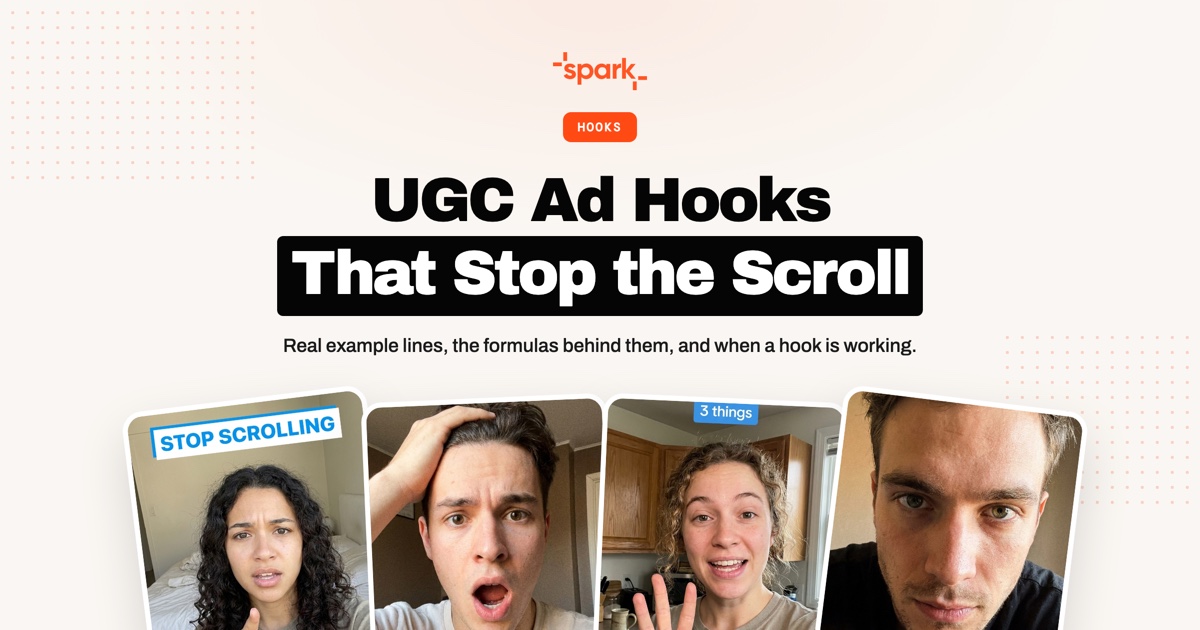
Real example hook lines, the formulas behind them, and the hook-rate benchmarks that tell you when one is working.
The exact anatomy of a brief that produces ads which convert, plus the briefing mistakes that quietly kill them.
A step-by-step framework for building a content engine that delivers consistent, compounding results.